

Canonical
2 November 2015
DJI launches most-powerful computer for drones – on Ubuntu
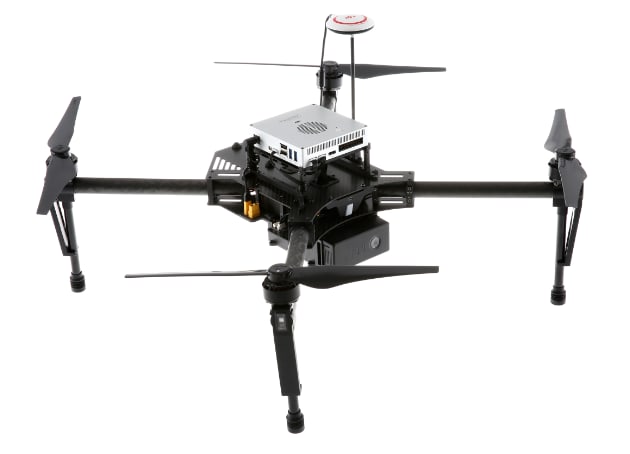
- The new Manifold is a high-performance embedded computer that cuts processing time and optimizes real-time data analysis for drones.
- Fully compatible with DJI’s Matrice 100, the Manifold unlocks the full potential of aerial platforms.
DJI, the world leader in creative aerial technology, today announced the launch of the DJI Manifold, a high-performance embedded computer designed specifically to fly. Utilizing DJI’s Onboard SDK (Software Development Kit), the Manifold is a user-friendly system enabling developers to create more powerful professional applications for use with aerial technology.
“With the Manifold, we are entering a new era of smarter, faster and more powerful aerial platforms. Manifold opens up for aerial and ground technology to intelligently work together to solve complex problems,” said Michael Perry, DJI’s Director of Strategic Partnerships. “We are excited to see what applications our developer community will come up with for this new platform.”
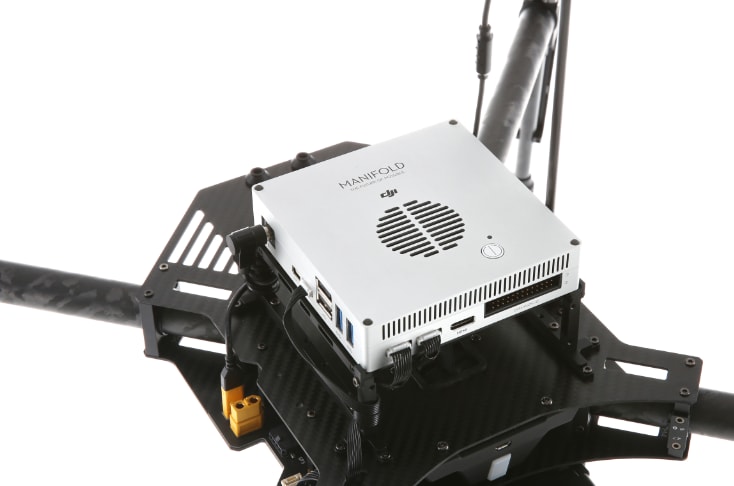
The Manifold is compatible with third-party sensors and enables developers to connect a wide variety of devices such as infrared cameras, atmospheric research devices and geographical surveying equipment to the Matrice 100. As the Manifold computer both collects and analyses data in the air, it provides an efficient solution for developers in need of time-sensitive information.
The Manifold runs on Canonical’s Ubuntu operating system and supports CUDA, OpenCV and ROS. With a Quad-core ARM Cortex A-15 Processor and a super-fast NVIDIA Kepler-based GPU, the Manifold provides powerful image processing and efficient parallel computing. The processing power of the GPU enables new artificial intelligence applications such as computer vision and deep learning. Equipped with USB, Ethernet, HDMI and a variety of others ports, it enables the use of a wide range of sensors, monitors or interfaces.
“We are excited to be working with DJI, who like us, believe in pushing technology beyond the limits of possibilities and paving the way for creators, makers and developers,” said Mark Murphy, Canonical’s VP, Devices Sales and Global Alliances.
Ubuntu 14.04, the Long Term Support (LTS) version, will be available on the Manifold, providing support and maintenance for five years from release date. This release comes with support for both multi-touch devices and HiDPI screens.
The Manifold with Ubuntu 14.04 will be available globally for purchase from the Official DJI Online Store http://store.dji.com/ as of today November 2, 2015.


